The Greater Manchester Combined Authority has approved the release of nearly £60 million to procure around 220 additional battery-electric buses for the region's public transport system. The first new electric buses are expected to enter service by the end of 2026.
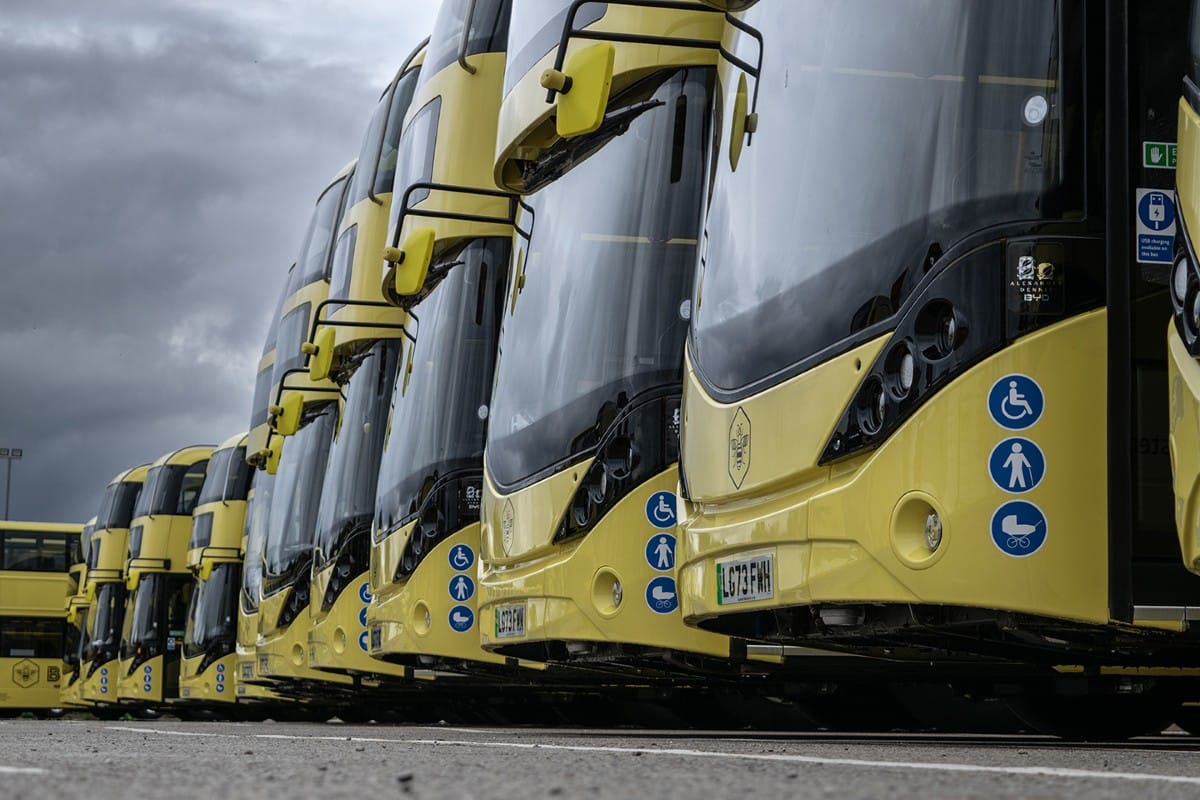 Image: Transport for Greater Manchester
By Carla Westerheide
The vehicles will be integrated into the so-called Bee Network, a landmark initiative launched in 2023 in Greater Manchester. This project aims to unify buses, trams, bicycles, and eventually railways into a single interconnected transport system. Currently, the Bee Network already operates 350 battery-electric buses—representing 20 per cent of its total fleet. Now, £59.1 million (approximately €67.3 million) has been allocated to subsidise the procurement of an additional 220 units. The objective is to convert a further 13 per cent of the bus fleet from diesel to fully electric operation, with the first buses from this new order expected to enter service by the end of 2026.
The funding, provided by the Greater Manchester Combined Authority, specifically covers the additional costs of procuring a Euro VI diesel bus compared to an emission-free alternative. These funds are part of a £1.07 billion sustainable transport programme for the Greater Manchester region, known as the City Region Sustainable Transport Settlement. According to officials, the goal is to transition the entire Bee Network bus fleet to zero-emission operation by 2030.
Vernon Everitt, Transport Commissioner for Greater Manchester, commented: “The Bee Network is making public transport more affordable, frequent and cleaner […] We are accelerating investment to introduce even more electric buses to add to those that already comprise 20% of our vehicles, marking another significant step towards the goal of a fully zero-emission bus fleet by 2030.” The tram network will also undergo significant improvements.